


Open Project 24


Open Project 24
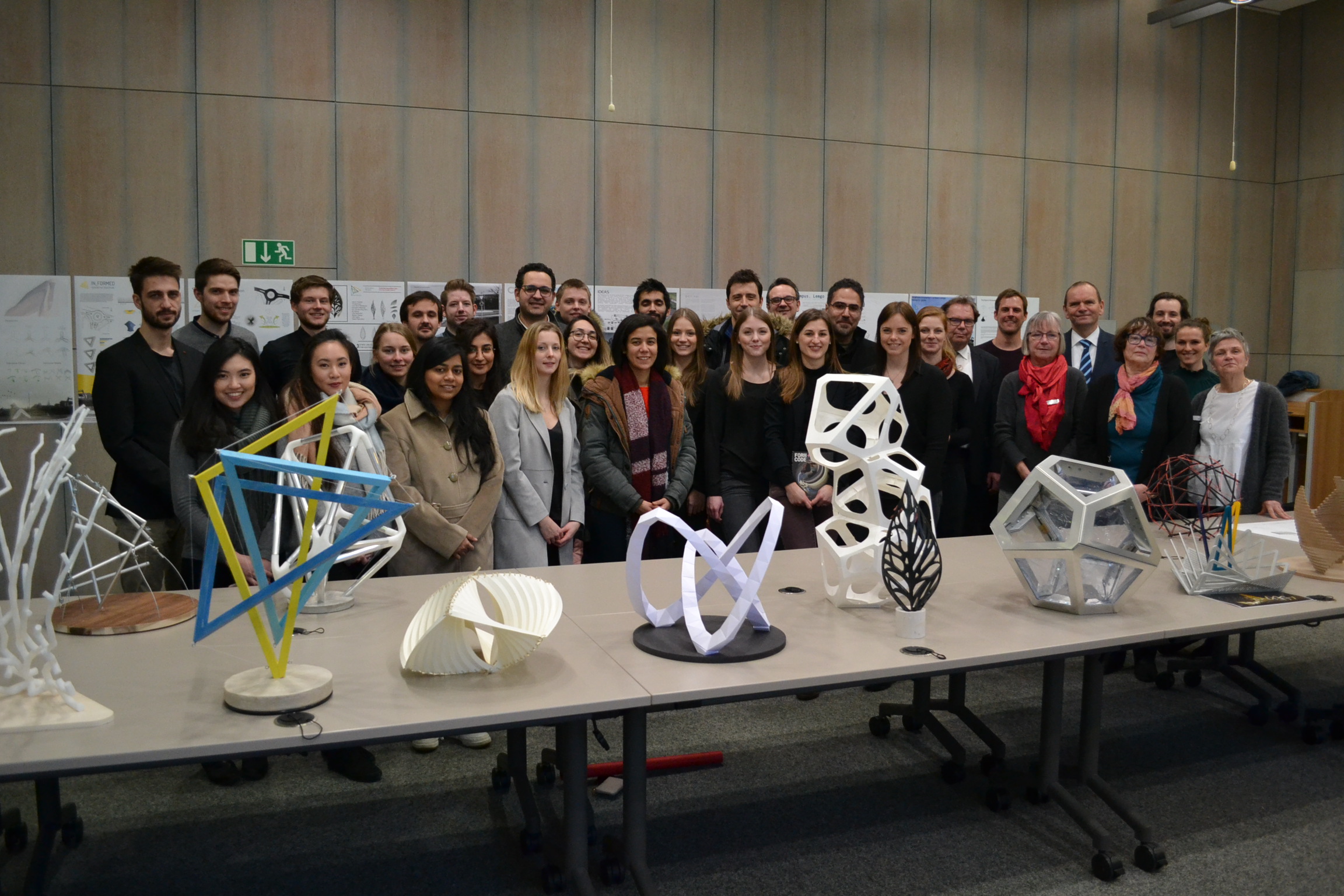
As part of the third semester, the open project can be seen as a preparation for the master thesis in the following semester.
With this module the students are tasked to explore individual concepts for context driven architectural projects, based on self developed research questions. The theoretical knowledge and practical skills learned in the modules and projects of previous semesters enable the students to further deepen their understanding of the use of computational design and production techniques in different project phases – the analytical phase, design development, communication and presentation as well as digital production.
Lastly the students can practice the communication of their research results in either scientific writing, an artistic study or an architectural concept.
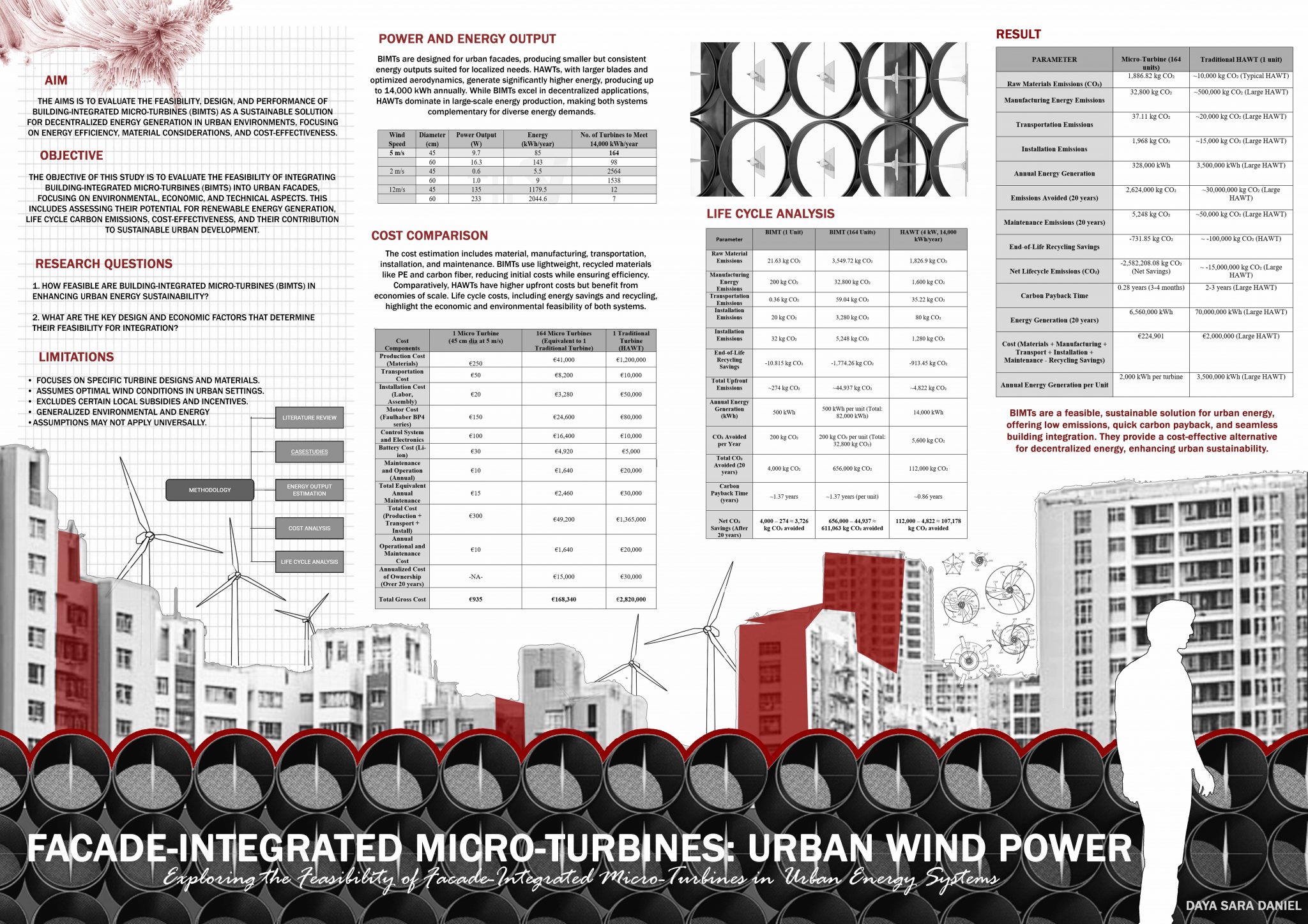
Daya Sara Daniel – Facade-Integrated Micro-Turbines: Urban Wind Power
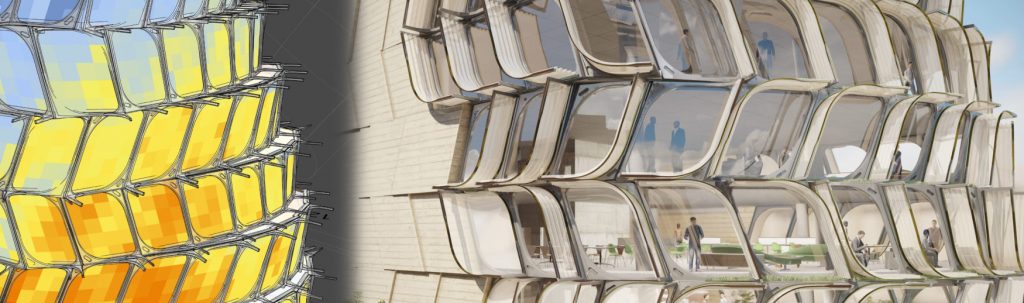
In today´s time many urban areas are facing the problems of increasing energy demands, climate change and the need for sustainable development. With this in mind, Daya Sara Daniel explores the integration of renewable energy systems into building design. This project investigates the potential and feasibility of modular facade panels with integrated micro-turbines, as a way to generate decentralized energy within urban context.
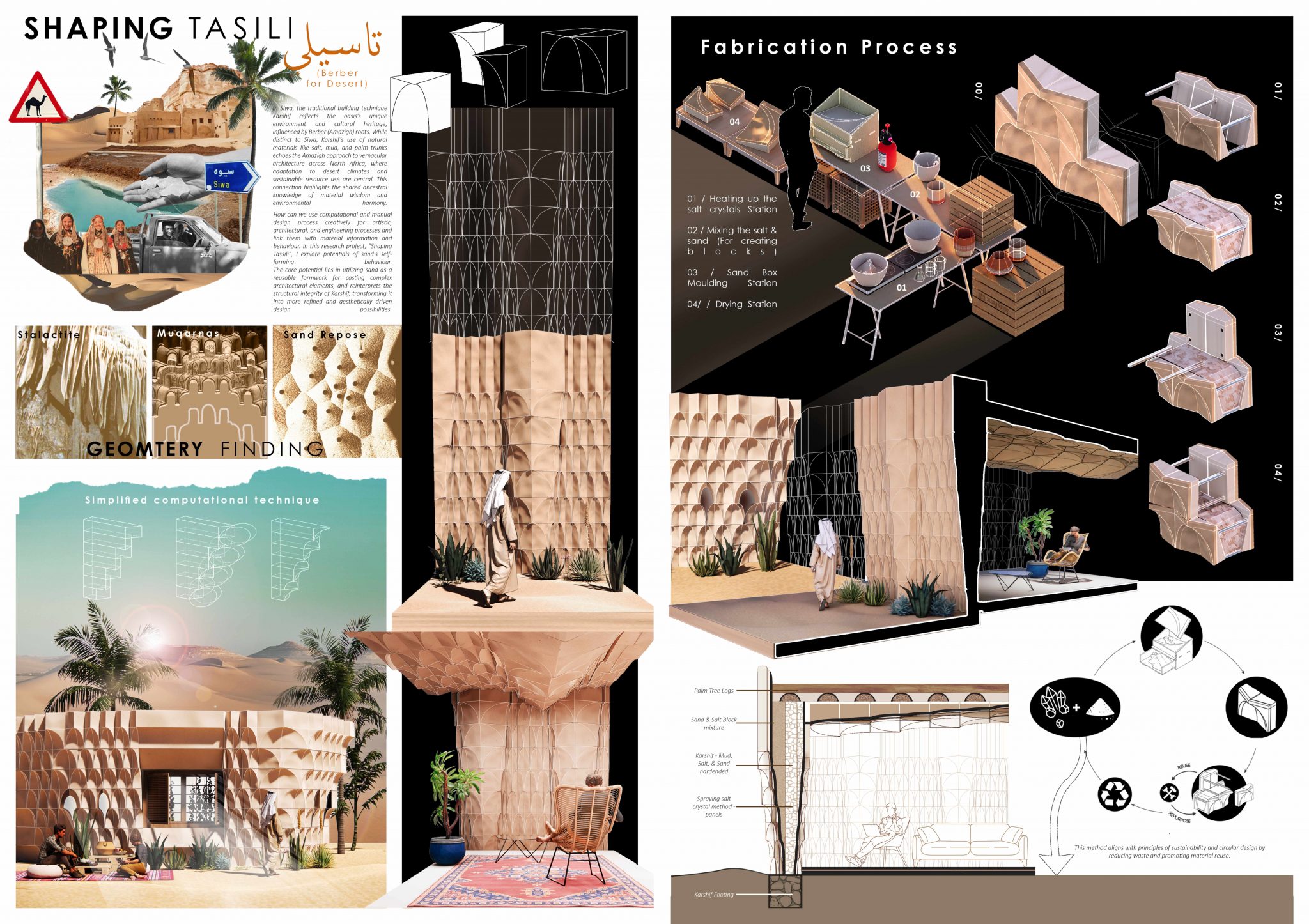
Farah Gheith – Shaping Tassili Berber for Desert
This project is inspired by the traditional building technique Karshif, a mixture of natural building materials, and explores sand´s self-forming behaviour. Farah Gheith sees the core potential in utilizing sand as a reusable framework for casting complex architectural elements, reinterpreting the structural integrity of Karshif, for more refined and aesthetically driven design possibilities.
“Is there a way to use sand as a reusable material and communicate this in a from appropriate to the material? To simply borrow them from nature rather than consuming…”
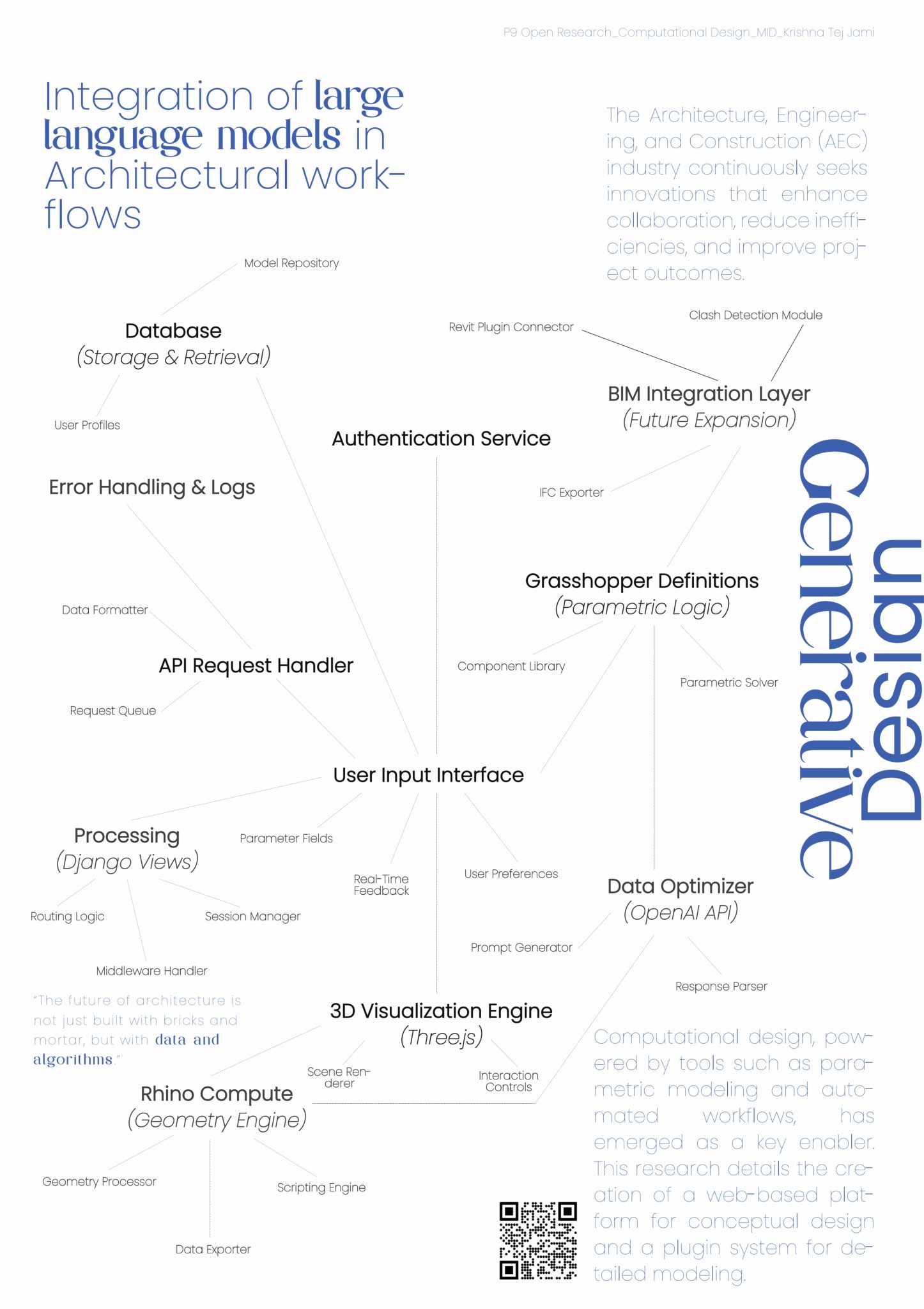
Krishna Tej Jami – Integrating Large Language Models in Architectural Design Workflows
Today traditional architectural workflows still involve time-consuming manual tasks and limited automation. With this project Krishna Tej Jami acknowledges the growing need to optimize these workflows with large-language-model-driven tools.
The integration of large language models aims to enhance both the efficiency and creativity of parametric modelling by automating repetitive tasks, while improving decision-making and enabling real-time visualization.
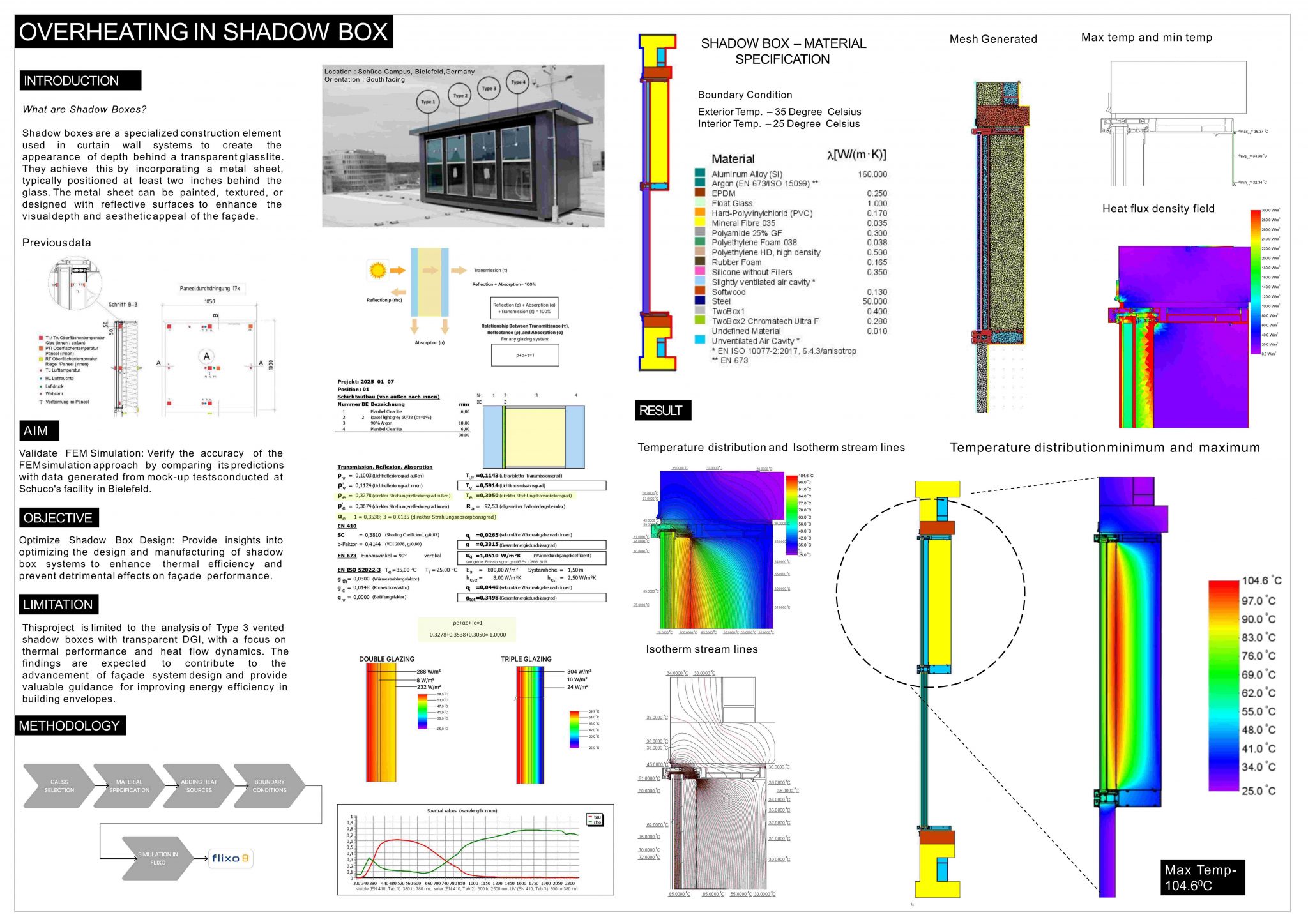
Jerin Joy – Overheating in Shadow Boxes
Shadow boxes are specialized construction elements used in curtain wall systems, creating the appearance of depth behind transparent glass panes. The additional incorporation of metal sheets can enhance the visual depth and aesthetic appeal. However a common problem that arises with this design is overheating.
Jerin Joy addresses this problem and aims to optimize shadow box design and manufacturing, in order to enhance thermal efficiency and prevent detrimental effects on facade performance.
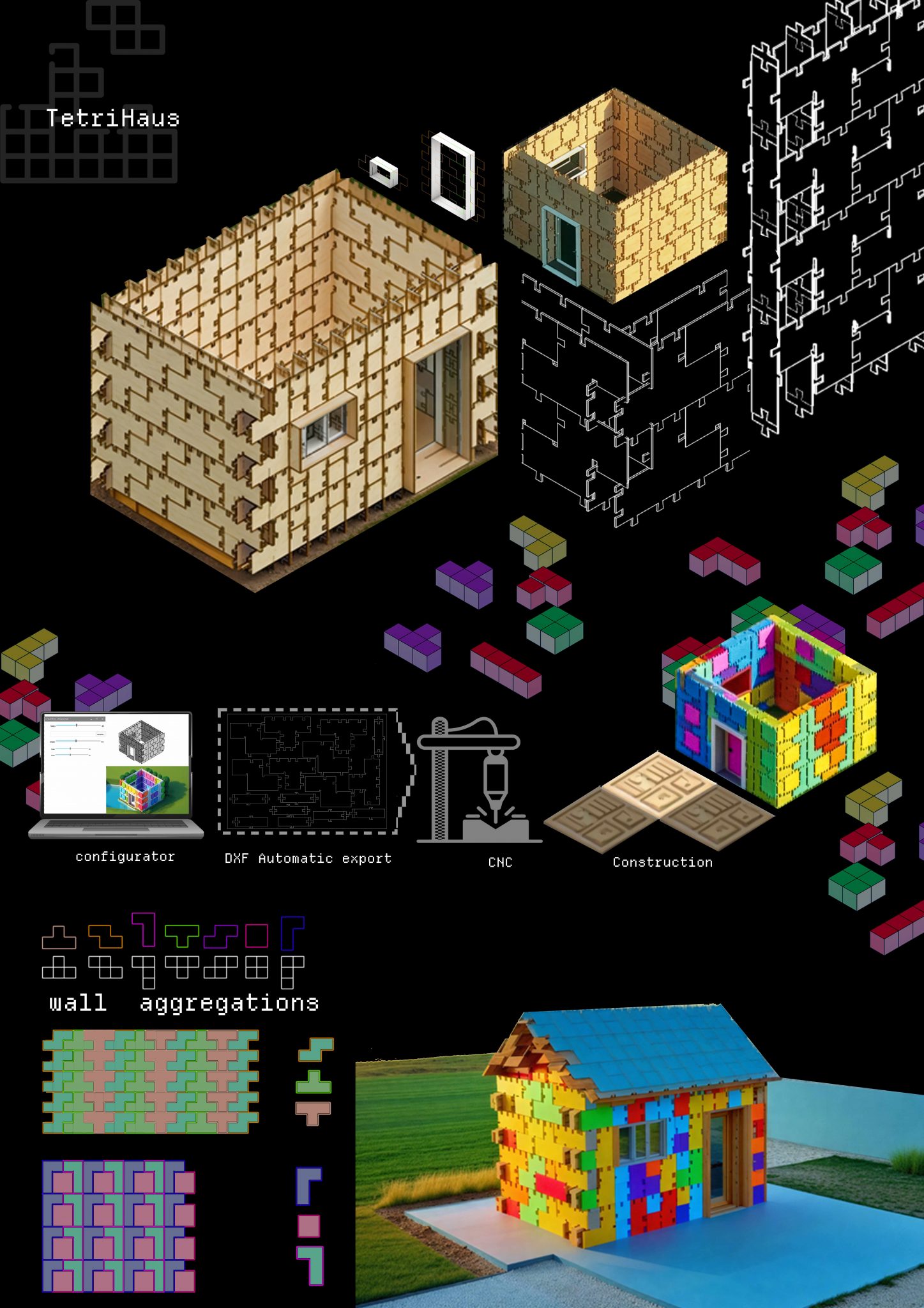
Marzie Molaei Maqsoudbeki – Incremental Modular Housing
Facing the global housing crisis requires innovative solutions, meeting immediate needs as well as providing long-term adaptability.
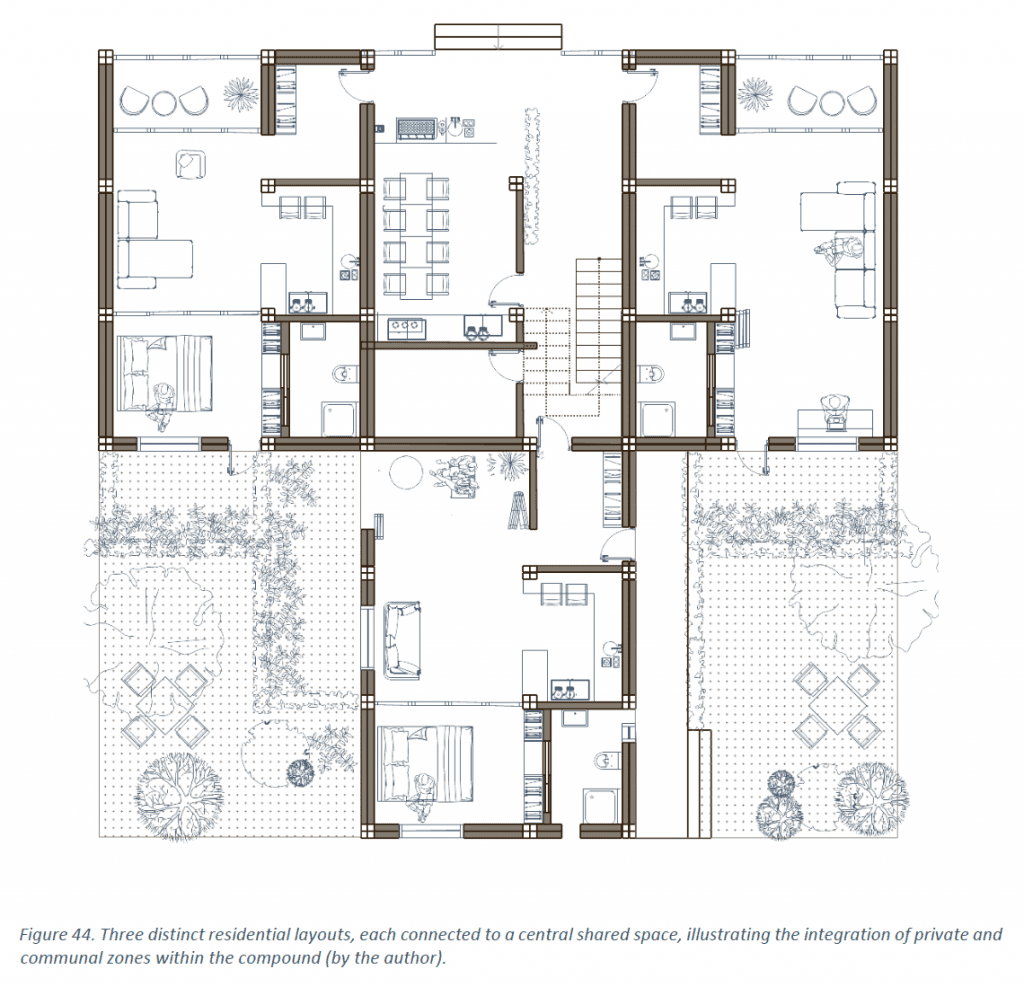
Marzie Molaei Maqsoudbeki approaches this topic in several steps – historical analysis, case study examination, theoretical framework development and practical implementation. This exploration of adaptable housing through incremental and modular design focuses on user participation, design flexibility and modern technology.
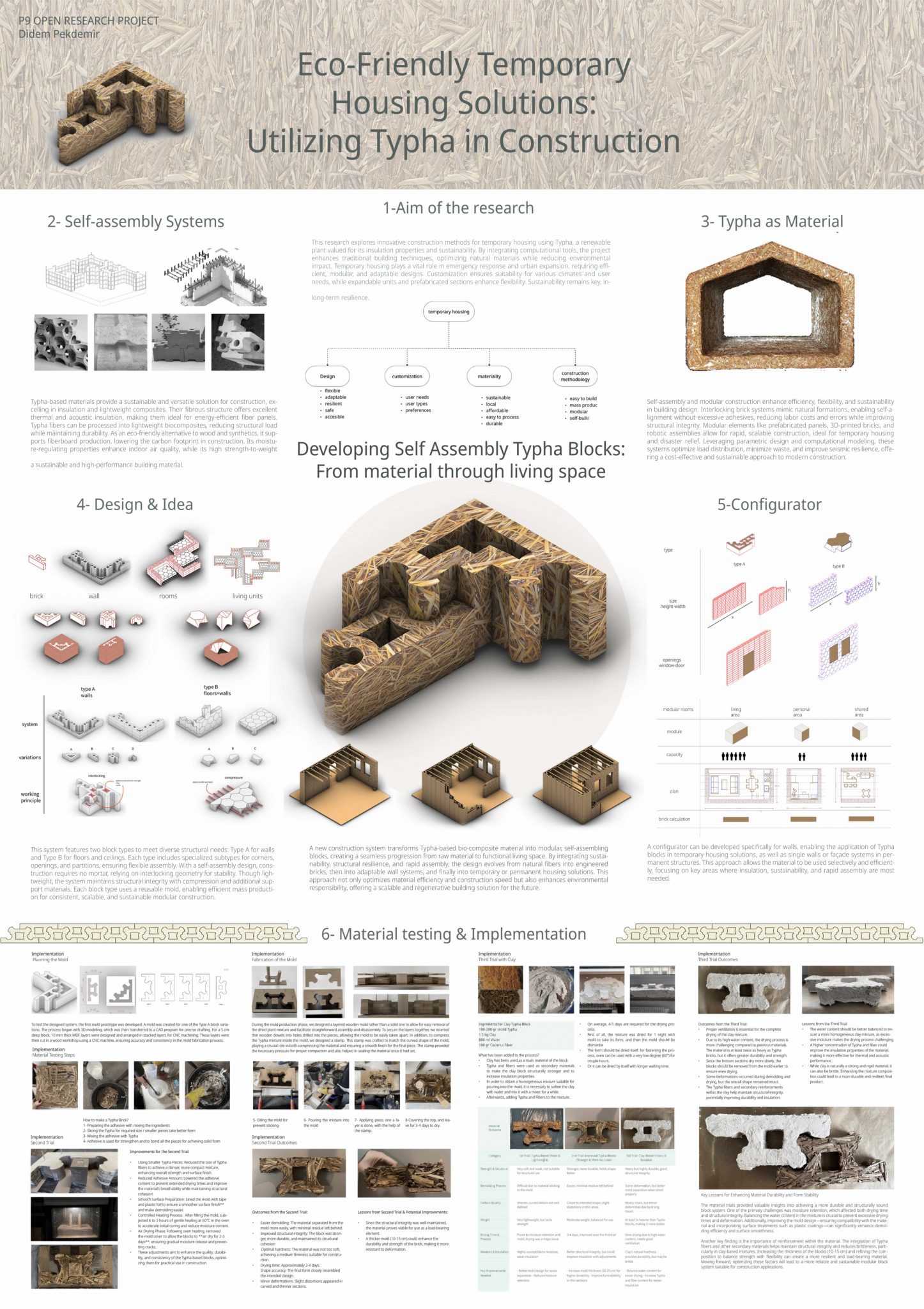
Didem Pekdemir – Eco-Friendly Temporary Housing Solutions: Utilizing Typha in Construction
As a result of an increasing number of natural disasters the demand for immediate shelter solutions grows as well. Not only should these solutions cater for the needs of durability and comfort but also provide environmental sustainability.
Didem Pekdemir explores innovative construction methods for temporary living spaces using typha. Furthermore the integration of computational tools into the design and construction process allows the augmentation of traditional building crafts to optimize the use of natural materials.

Daya Sara Daniel Farah Gheith 
Krishna Tej Jami Jerin Joy Marzie Molaei Maqsoudbeki Didem Pekdemir
More projects

MID
2024
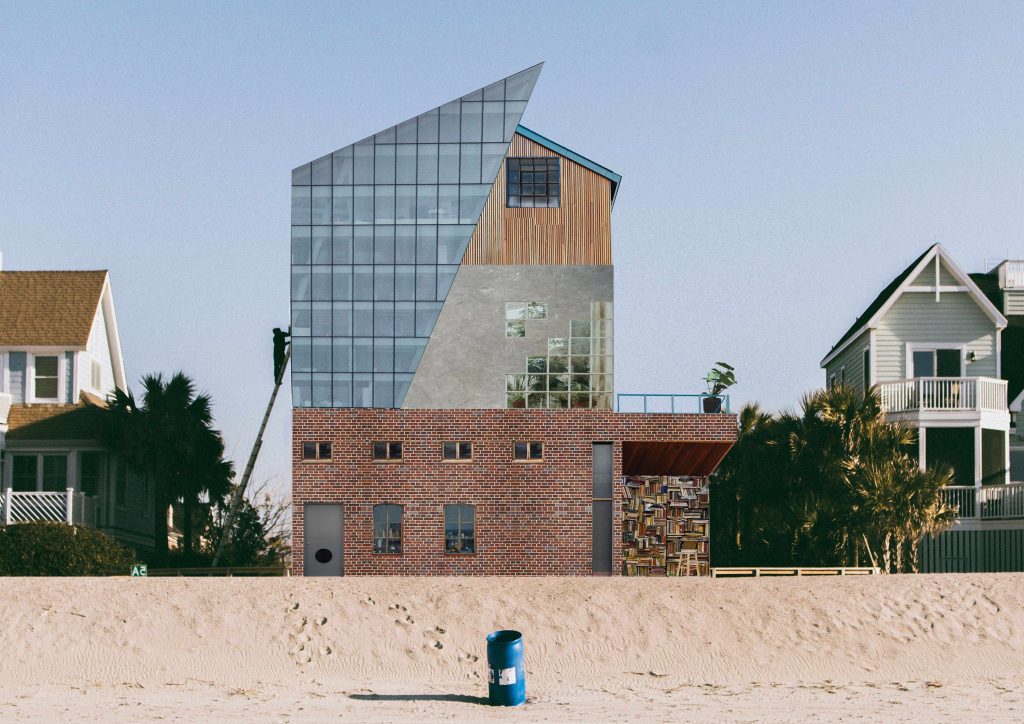
Design With Robots
CAAD
2019
Resilient City cad18
MID
2025
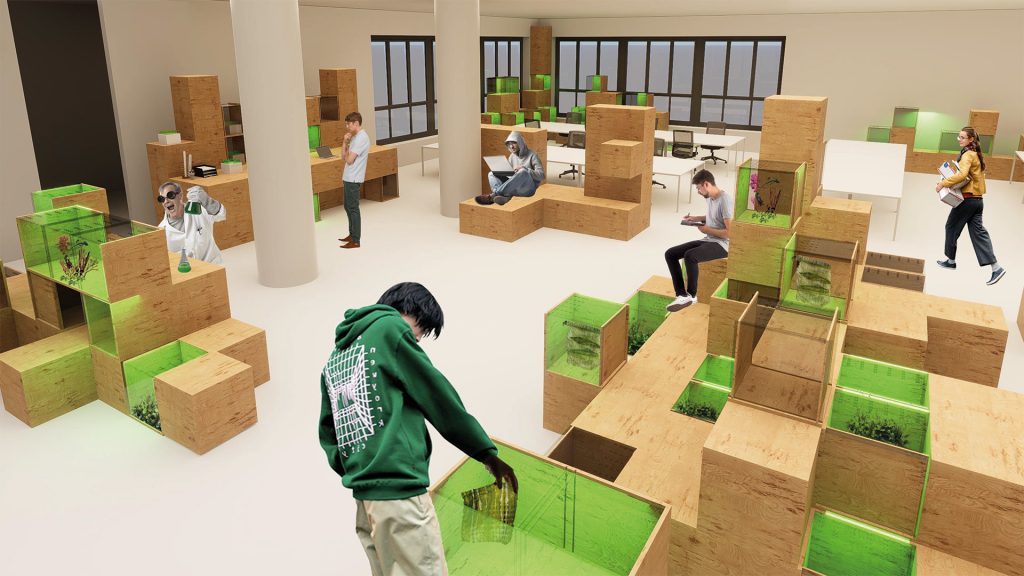
BIOM-Fologram cd24
MID
2024
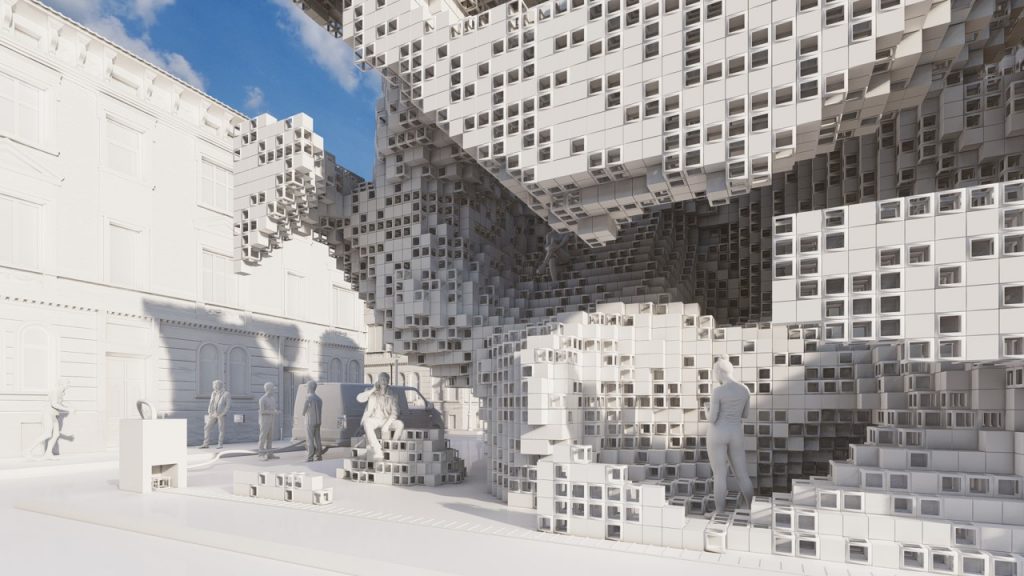
Open Project 23

MID
2020
Thesis: Synthetic & Tangible Agents
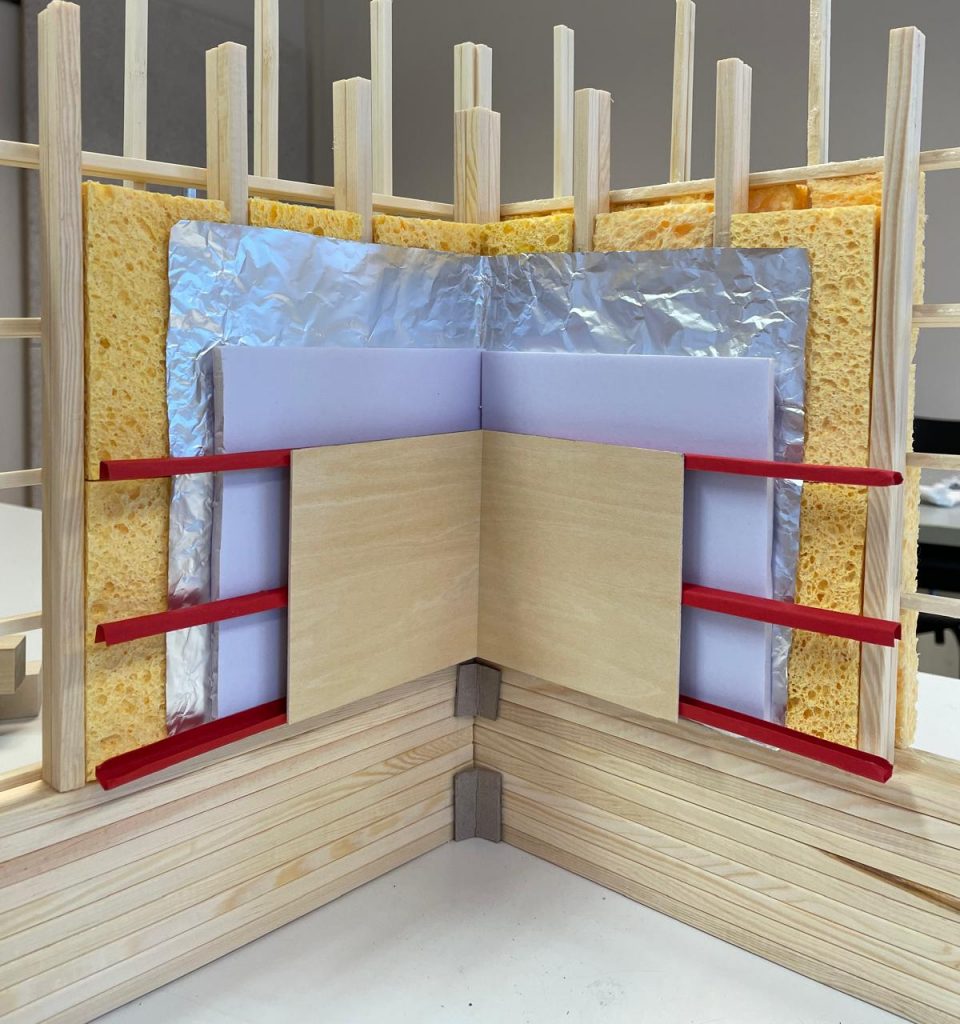
MID
2024
Façade Reform Workshop

CAAD
2016
Generative Skin

MID
2019
Floating City dtmII 19

CAAD
2016
Follow The White Rabbit / TRANSFORMATION
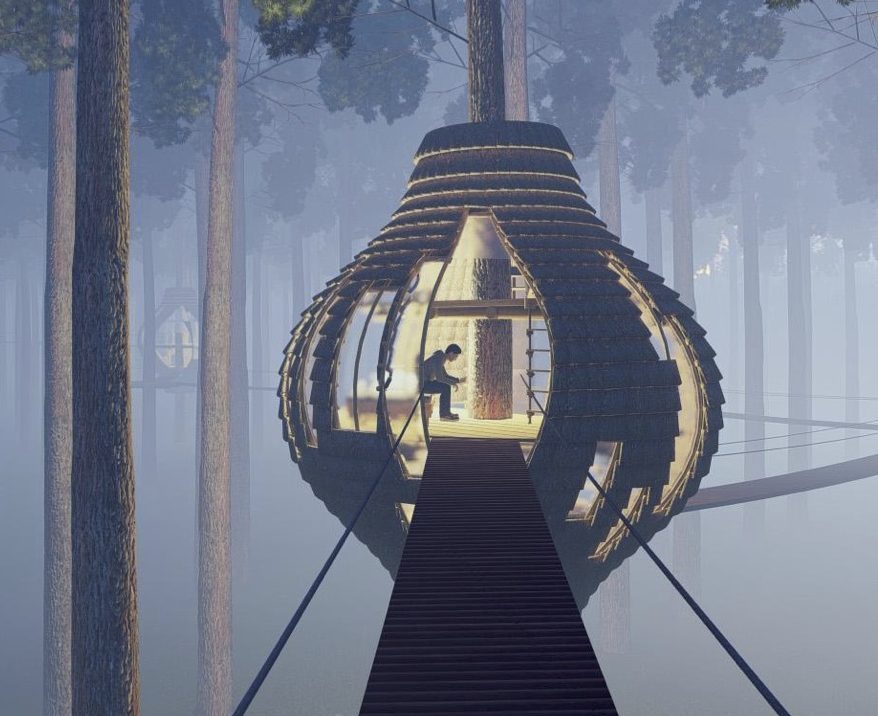
MID
2023
Nabitat id23

CAAD
2016
Urban Nomad / TRANSFORMATION
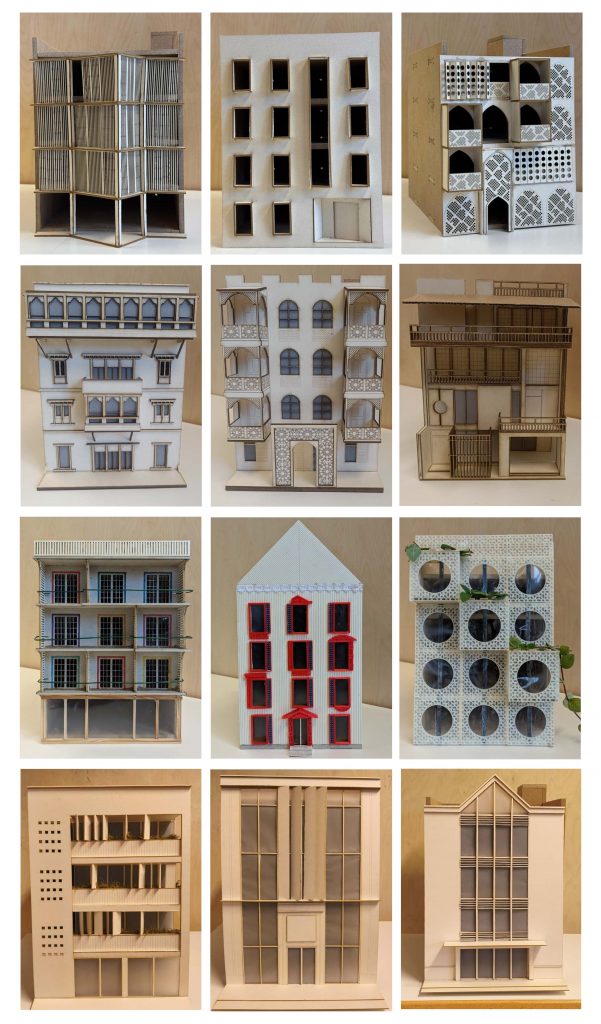
MID
2026
Culture and Climate Related Façade Design: MID2040, SoSe25
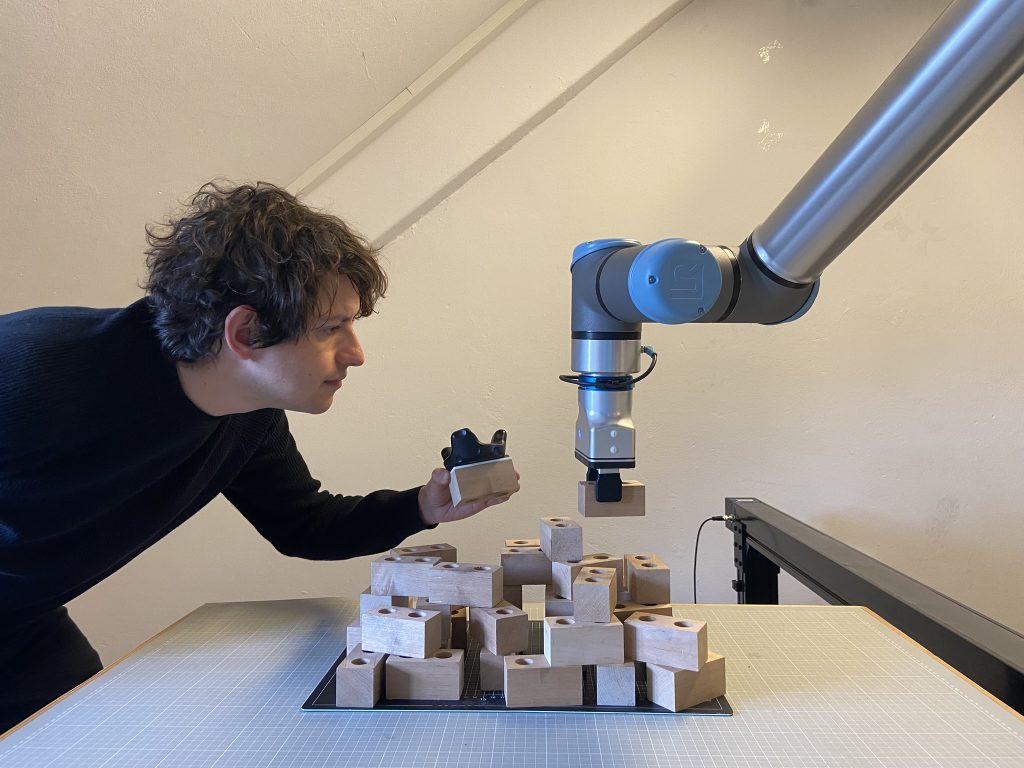
MID
2025
Co-Creative Robots df25
CAAD
2023
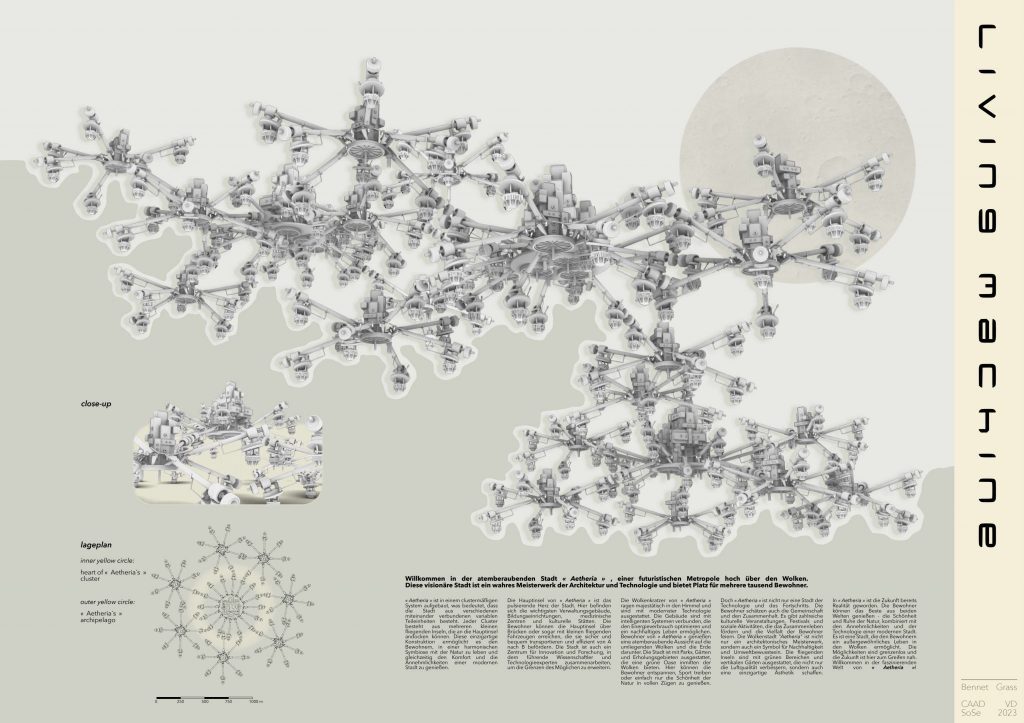
Living Machine vd23

CAAD
2020
Living Pod vd20

MID
2024
Friedwald Kalletal id24
MID
2020
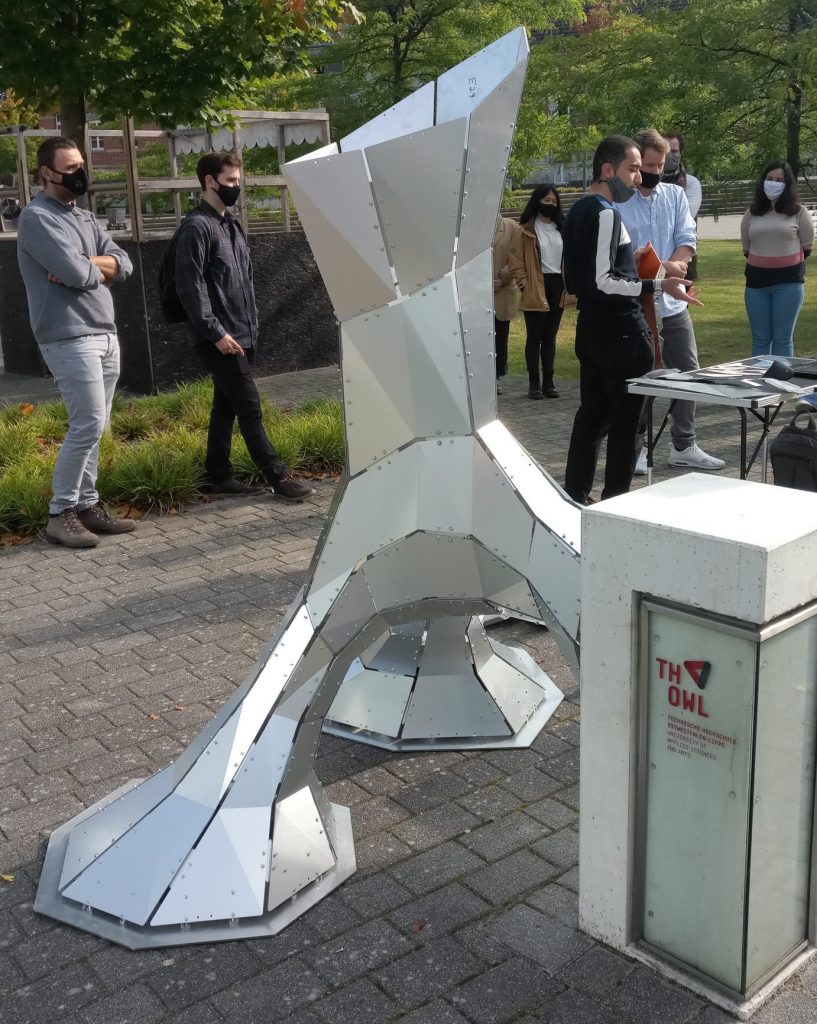
Space Mesh df20
CAAD
2016
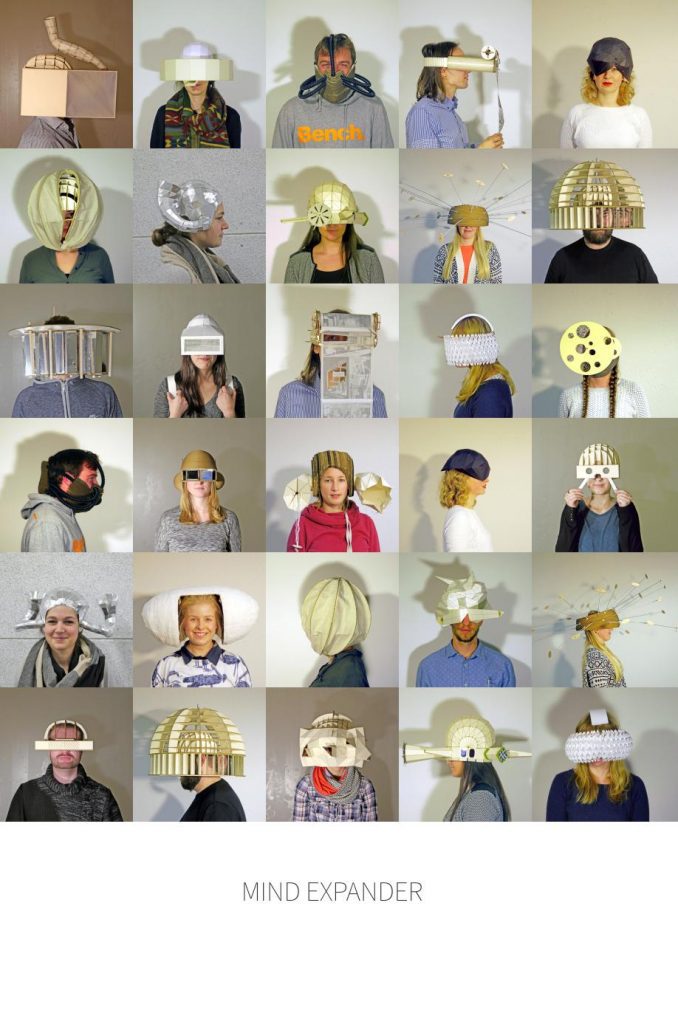
Mind Expander / TRANSFORMATION
MID
2020
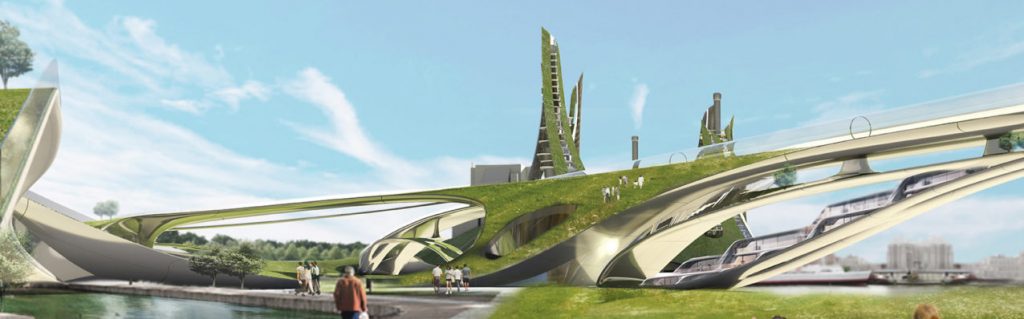
21st Century Skyscraper ibd20
MID
2019
Hyper Mobility Hub ibd19
MID
2026
Thesis: Digital Typha-House
MID
2020
Climate Related Facade Design
MID
2023
Open Project 22
MID
2021
Open Project 20
MID
2025