



Hydrogel Coated Concrete Bricks: Heavy Rain Damage Control


Hydrogel Coated Concrete Bricks: Heavy Rain Damage Control
Author: Ilayda Ergin
Supervisors: Prof. Daniel Arztmann (1) and Asst. Prof. Zelal Çinar (2).
1. Detmold School of Design, University of Applied Sciences and Arts (TH OWL), Emilienstraße 45, 32756 Detmold, Germany
2. TOBB University of Economics and Technology, Söğütözü Caddesi, No:43, 06510 Çankaya, Ankara, Türkiye
Abstract
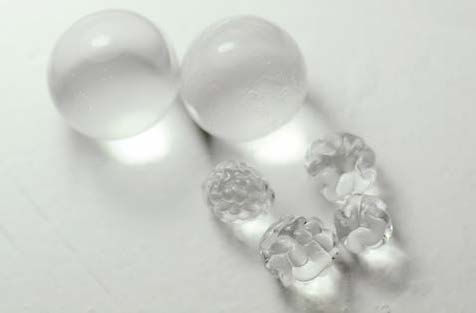
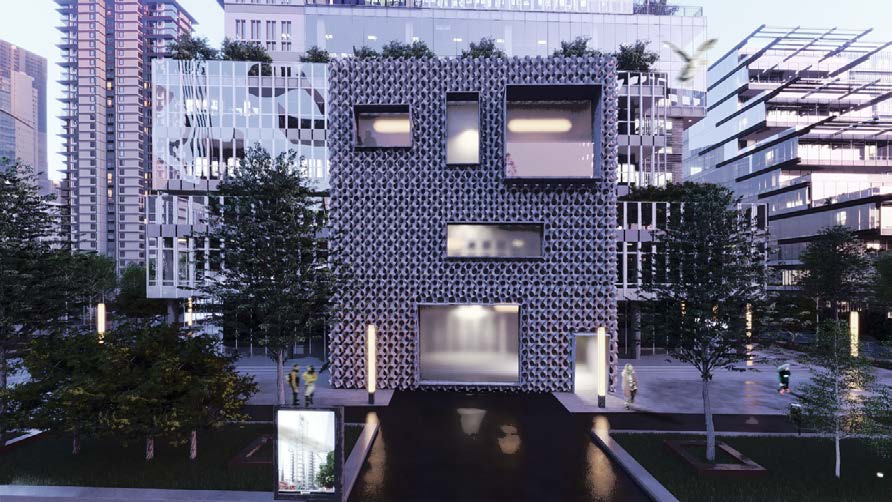
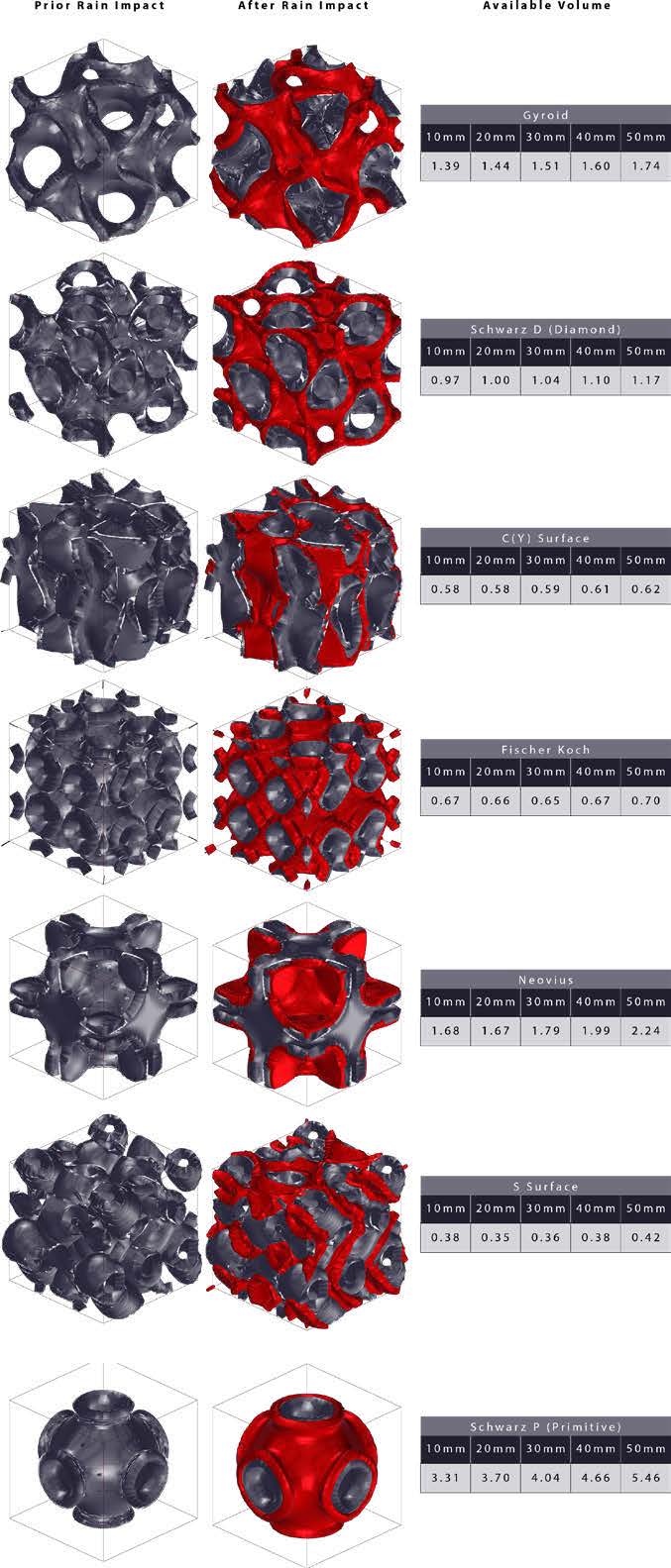
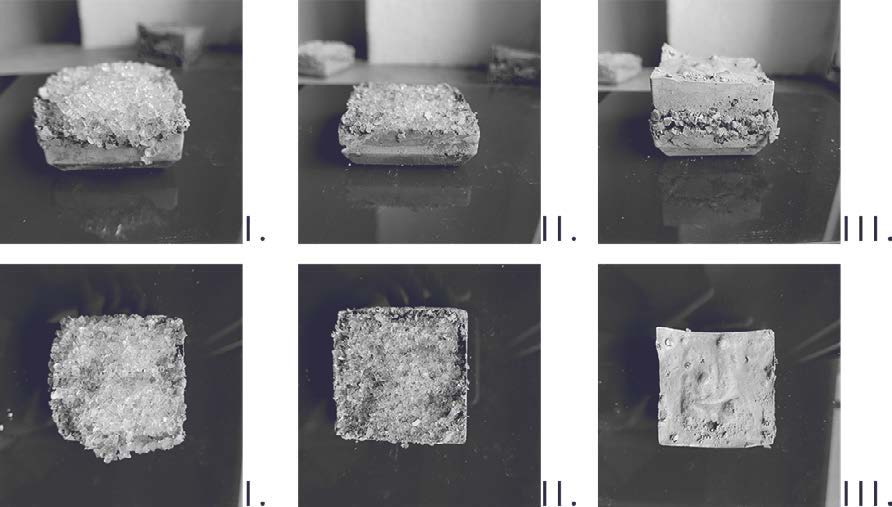
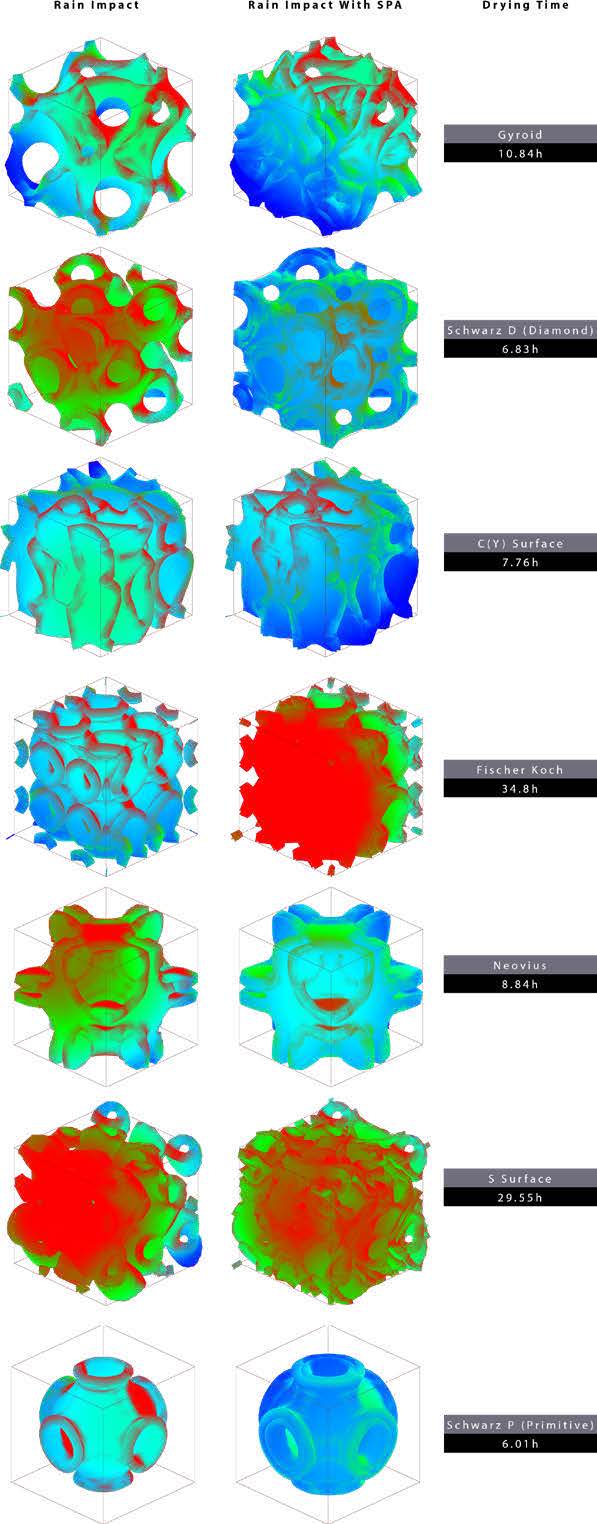
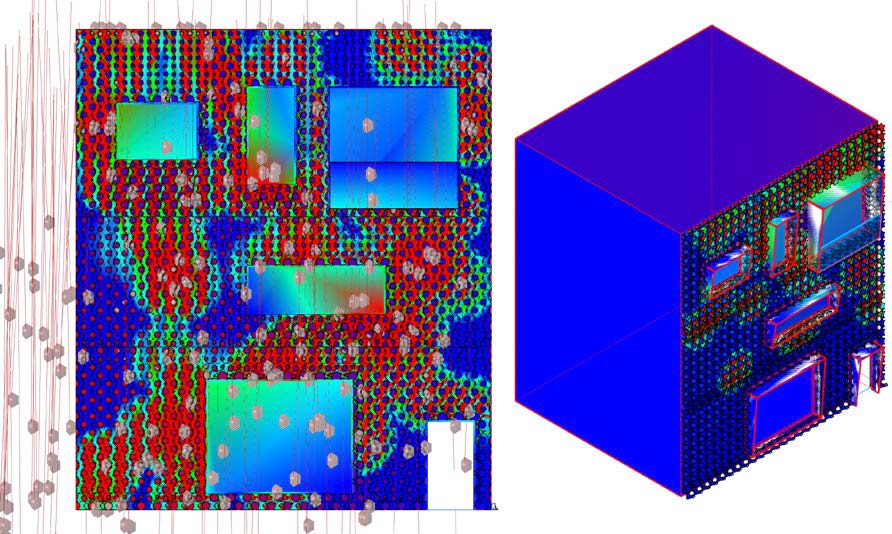
In the context of global climate change and urban densification, intense rainfall events and wind driven rain (WDR) increasingly lead to torrential runoff and urban flooding. Conventional façade designs, which prioritize the exclusion of water from insulation layers, contribute to the exacerbation of urban water impact. This thesis proposes a turnaround strategy for WDR protection of the facades, with adaptive water absorption and storage mechanisms of super absorbent polymers (SAP). The outermost wall layer is composed of triply periodic minimal surfaces (TPMS): matrix-like structures that swell upon water exposure, absorbing from five to ten times their dry weight while maintaining a high diffusional resistance. As water is absorbed, intracellular filaments are elastically stretched, generating a counteracting force that limits excessive swelling and preserves formal integrity. Once the exposure ceases, the SAP layer gradually releases the stored water, returning to its original state without damage. The goal is to answer two main questions: How can the water absorption and release mechanism be translated into an effective architectural façade for integrated urban water management, and how does the hydrogel porous façade perform in water absorption, swelling, and release under cyclic conditions? This thesis examines the standards of heavy rain events and impact parameters, characteristics of SAP, and creates vulnerability tests on TPMS bricks to design a protective facade. This research investigates the potential of hydrogel-based porous façade systems that actively absorb, store, and subsequently release rainwater. Computational simulations and material prototyping are employed to assess the water absorption, swelling, and shrinkage behaviors of these time related constructs. The findings aim to inform the development of sustainable, water-responsive building envelopes that not only mitigate urban flooding and excessive concretion but also provide a practical, real-life solution for efficient water management in metropolitan environments through realistic material prototyping and scalable design implementations.
Keywords: wind driven rain loads, superabsorbent polymers, triply periodic minimal surfaces, sustainable
façade.
For the Full article, click here!